






Lug Butterfly Valves: A Comprehensive Guide for Industrial Fluid Control Solutions
2026-02-25

1. Introduction: The Core Role of Lug Butterfly Valves in Industrial Systems
Industrial fluid handling and process management depend heavily on dependable, high-performance valves to regulate flow, ensure system safety, and maintain operational efficiency. Among all valve categories, the butterfly valve family stands out for its versatility, and within this family, the lug butterfly valve (also commonly referred to as lug type butterfly valve or butterfly valve type lug) has become a staple solution for engineers, plant managers, and procurement teams across global industries.
What makes the lug type butterfly valve stand out is its perfect fusion of straightforward design, rugged durability, and flexible functionality. Unlike other butterfly valve variants—most notably the wafer butterfly valve (or wafer type butterfly valve)—the lug-style structure solves real-world industrial challenges—from limited installation space to frequent maintenance needs. This guide dives deep into the design, performance, materials, and practical use cases of the lug butterfly valve, providing targeted insights for professionals seeking reliable fluid control components that outperform standard butterfly valve options in specific applications.
2. What Are Lug Butterfly Valves?
2.1 Defining the Lug-Style Structure
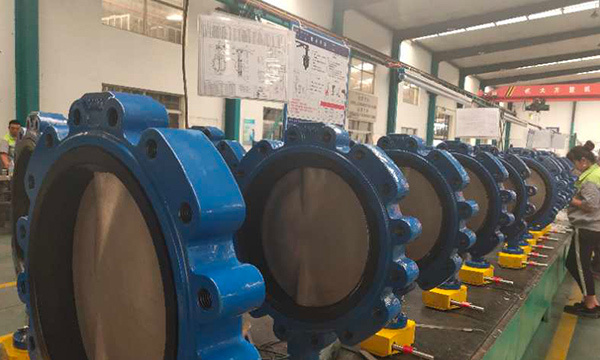
The lug butterfly valve, often called lug type butterfly valve or butterfly valve type lug, is a specialized quarter-turn butterfly valve variant, identified by its signature threaded lug inserts integrated into the valve body circumference. This design is what sets it apart from the more common wafer butterfly valve (wafer type butterfly valve) and other butterfly valve models:
These lugs serve as dedicated mounting points, allowing the lug type butterfly valve to be fixed between two independent flanges using separate bolts— a key difference from the wafer butterfly valve, which requires full through-bolts across the pipeline to secure it between flanges.
Unlike the wafer type butterfly valve, which relies on continuous pipeline support to maintain stability, the butterfly valve type lug does not depend on the pipeline’s structural integrity for mounting.
This structural design creates a modular, disconnectable installation profile that makes the lug butterfly valve a more flexible choice than both the wafer butterfly valve and standard flanged butterfly valve models.
2.2 Core Operating Mechanism (Shared with Most Butterfly Valve Variants)
While the lug type butterfly valve has a unique mounting structure, its core operating principle aligns with most butterfly valve designs, including the wafer butterfly valve:
A circular, precision-machined disc acts as the main flow-control component—same as in a standard butterfly valve or wafer type butterfly valve.
Connected to a central valve stem, the disc rotates a full 90 degrees to switch between fully open, fully closed, or throttling positions— a quarter-turn mechanism that is a hallmark of all butterfly valve variants, from the lug butterfly valve to the wafer butterfly valve.
When open, the disc lies parallel to the flow path, creating near-unobstructed fluid movement; when closed, it forms a tight seal against the valve seat to stop flow completely— a feature that ensures the lug type butterfly valve matches the performance of high-quality wafer butterfly valve models in terms of flow control.
This direct actuation method supports both manual hand-wheel operation and automated electric/pneumatic control systems, making the lug butterfly valve as versatile as the wafer type butterfly valve in terms of operational flexibility.

3. Key Structural Benefits of Lug Butterfly Valves
3.1 Flexible, Maintenance-Friendly Installation
One of the biggest advantages of the lug butterfly valve (lug type butterfly valve) over the wafer butterfly valve (wafer type butterfly valve) is its installation and maintenance flexibility:
The lug mounting system allows partial pipeline disassembly without disturbing adjacent flanges or equipment— a feature the wafer type butterfly valve lacks, as it requires removing the entire pipeline’s through-bolts to access the valve.
Ideal for end-of-line installations, isolated pipeline sections, and systems requiring frequent component replacement— scenarios where the wafer butterfly valve would cause unnecessary downtime.
Reduces reliance on specialized hardware, as no long through-bolts are needed for assembly— unlike the wafer butterfly valve, which depends on through-bolts to secure it between flanges.
3.2 Ultra-Compact Spatial Profile (On Par with Wafer Butterfly Valves)
Like the wafer type butterfly valve, the lug butterfly valve boasts a compact design, but with added structural benefits:
Features a slim, short-body design that takes up significantly less axial space than gate valves, ball valves, or globe valves— matching the space-saving advantages of the wafer butterfly valve.
Perfect for congested plant layouts, skid-mounted systems, mobile processing units, and retrofitting projects with strict space limits— just like the wafer butterfly valve, but with the added benefit of independent mounting.
Compact size does not reduce flow capacity, maintaining high performance in tight installations— a key feature shared by both the lug type butterfly valve and wafer butterfly valve.
3.3 Lightweight Build for Easier Handling
Both the lug butterfly valve and wafer butterfly valve are lighter than traditional valves, but the lug type butterfly valve offers added convenience in handling:
Weighs far less than heavy cast valves, lowering transportation costs and physical installation effort— similar to the wafer type butterfly valve, but with the added stability of lug mounting.
Reduces structural stress on pipelines and eliminates the need for heavy lifting machinery in most setups— a benefit that makes both the lug butterfly valve and wafer butterfly valve preferred over bulkier butterfly valve variants.
Cuts down on labor time and operational costs during initial installation and system upgrades— an advantage that applies to all butterfly valve types, but is amplified by the lug type butterfly valve’s easy disassembly.
4. Operational Performance Advantages
4.1 Minimal Pressure Drop
The lug butterfly valve (lug type butterfly valve) delivers superior flow performance, even when compared to high-quality wafer butterfly valve models:
The full-bore, unobstructed flow path creates extremely low resistance to fluid movement— a feature that is slightly enhanced by the lug type butterfly valve’s design, as it avoids the pressure interference sometimes caused by through-bolts in wafer butterfly valve installations.
Preserves system pressure and reduces energy consumption for pumps, blowers, and compressors— a critical benefit for all butterfly valve variants, but especially valuable for the lug butterfly valve in high-flow applications.
Critical for high-flow applications such as water distribution, HVAC circulation, and bulk fluid transfer— where the lug butterfly valve and wafer butterfly valve both excel, but the lug type butterfly valve offers better long-term stability.
4.2 Versatile Flow Control
The lug butterfly valve (butterfly valve type lug) matches or exceeds the flow control capabilities of other butterfly valve types, including the wafer butterfly valve:
Delivers reliable performance for both on/off isolation and precise flow throttling— a versatility that makes it a top choice among butterfly valve variants, alongside the wafer type butterfly valve.
Adapts smoothly to low-pressure and medium-pressure operating conditions— same as the wafer butterfly valve, but with the added benefit of better seal integrity in fluctuating pressure environments.
Provides tight shut-off with premium seat materials, preventing unwanted leakage in sensitive processes— a feature that ensures the lug type butterfly valve is suitable for applications where the wafer butterfly valve might struggle with seal wear over time.
4.3 Broad Industry Compatibility
Like the wafer butterfly valve, the lug butterfly valve is widely used across industries, but its unique design makes it more adaptable to specific scenarios:
Widely used in water & wastewater treatment, municipal utilities, commercial HVAC, chemical processing, and power generation— same as the wafer type butterfly valve, but preferred in systems requiring frequent maintenance.
Performs consistently in continuous-duty industrial environments with moderate operating conditions— a trait shared by all high-quality butterfly valve models, including the lug butterfly valve and wafer butterfly valve.
Serves as a cost-effective replacement for bulkier valves in general fluid control applications— offering the same cost savings as the wafer butterfly valve, but with added installation flexibility.


5. Material Options & Fluid Compatibility
5.1 Valve Body Materials
Both the lug butterfly valve (lug type butterfly valve) and wafer butterfly valve (wafer type butterfly valve) offer similar material options, tailored to different fluid environments:
Ductile Cast Iron: High strength, cost-efficient, suitable for water, oil, and non-corrosive gases— commonly used for both lug and wafer butterfly valve models in general industrial applications.
304/316 Stainless Steel: Outstanding corrosion resistance, designed for chemicals, food-grade processes, and marine environments— a premium option for both the lug type butterfly valve and wafer type butterfly valve.
Carbon Steel: Durable for high-temperature, non-corrosive industrial process systems— ideal for heavy-duty butterfly valve applications, whether lug or wafer style.
5.2 Seal & Disc Materials
Seal and disc materials are critical for both the lug butterfly valve and wafer butterfly valve, as they determine leak tightness and service life:
EPDM: Resistant to water, steam, and mild chemicals; standard for HVAC and water treatment— the most common seal material for both lug type butterfly valve and wafer type butterfly valve models.
Viton®: Withstands high temperatures and aggressive fluids, ideal for harsh chemical applications— a premium upgrade for both lug and wafer butterfly valve variants.
PTFE: Non-stick, chemically inert, perfect for sanitary, pharmaceutical, and highly corrosive media— recommended for specialized butterfly valve applications, whether lug or wafer style.
5.3 Supported Media Types
The lug butterfly valve (butterfly valve type lug) and wafer butterfly valve (wafer type butterfly valve) support similar media types, making them interchangeable in many applications:
Neutral fluids: clean water, compressed air, mineral oil, and inert gases— compatible with all standard butterfly valve models, including lug and wafer types.
Mildly corrosive media: dilute acids, wastewater, and alkaline solutions— suitable for both lug butterfly valve and wafer butterfly valve models with corrosion-resistant materials.
Specialized material combinations enable use with aggressive chemicals and high-temperature fluids— a feature that applies to both lug type butterfly valve and wafer type butterfly valve, depending on material selection.
6. Selection & Maintenance Guidelines
6.1 Critical Selection Factors
When selecting a lug butterfly valve (lug type butterfly valve) over a wafer butterfly valve (wafer type butterfly valve) or other butterfly valve variants, consider these key factors:
Pressure Rating: Match the lug butterfly valve’s Class or PN rating to the maximum system operating pressure— same as when selecting a wafer type butterfly valve.
Temperature Range: Choose body and seal materials compatible with full operational temperature limits— a critical consideration for all butterfly valve types, including the lug butterfly valve.
Fluid Properties: Consider corrosiveness, abrasiveness, and viscosity when selecting materials— ensuring the lug type butterfly valve (or wafer butterfly valve) can withstand the media it will handle.
Flange Standards: Ensure the lug butterfly valve’s lug design aligns with ANSI, DIN, JIS, or other regional pipeline standards— unlike the wafer butterfly valve, which relies on flange alignment for proper mounting.
Maintenance Needs: If frequent maintenance is required, the lug butterfly valve is a better choice than the wafer type butterfly valve, as it can be removed without disassembling the entire pipeline.
6.2 Proactive Maintenance Practices
Maintaining a lug butterfly valve (butterfly valve type lug) is straightforward, with similar practices to the wafer butterfly valve, but with a few key differences:
Regular visual inspections for corrosion, seal wear, and debris buildup on the disc— same as for a wafer butterfly valve, but pay extra attention to lug bolts for signs of loosening.
Periodic lubrication of the valve stem and actuation components for smooth rotation— a practice that applies to all butterfly valve variants, including the lug and wafer types.
Timely replacement of worn seals to maintain leak-proof shut-off performance— critical for both the lug type butterfly valve and wafer type butterfly valve to prevent system inefficiencies.
Routine torque checks on lug bolts to prevent loosening from system vibration— a step unique to the lug butterfly valve, as the wafer type butterfly valve relies on through-bolts for stability.
7. Conclusion
The lug butterfly valve— also known as lug type butterfly valve or butterfly valve type lug— is a standout variant in the butterfly valve family, offering unique advantages over the wafer butterfly valve (wafer type butterfly valve) and other butterfly valve models. Its unique lug mounting structure, compact form, low pressure drop, and material versatility make it suitable for countless applications across manufacturing, utilities, and process engineering— especially in scenarios where maintenance flexibility and installation adaptability are critical.
While the wafer butterfly valve remains a reliable choice for many standard applications, the lug butterfly valve excels in environments where partial pipeline disassembly, long-term stability, and ease of maintenance are priorities. By understanding the structural strengths, performance benefits, and material compatibility of the lug butterfly valve— and how it compares to other butterfly valve types— industrial professionals can make informed choices that boost system efficiency, lower costs, and extend service life. For any operation prioritizing reliability, ease of use, and cost efficiency, the lug butterfly valve remains a top-tier choice in fluid control system design.

vavle,butterfly valve,lug butterfly valve,lug type butterfly vavle
Veyron Valve (Tianjin) Co., Ltd.
Tel:+86 13821711216
Wechat/whatsapp:+86 18822206187
E-mail:anna@veyronvalve.com
Address:No.30,Xiaozhan Industrial park,Jinnan District,Tianjin,China