






Single Disc Check Valves: Best Practices for Design, Operation, Selection and Maintenance
2026-03-24
If you work with industrial piping, fluid systems, or any setup where backflow can wreck your day (and your equipment), single disc check valves are non-negotiable. They’re the unsung, self-actuated safety gates of your pipeline—no external controls, no fancy actuation, just a simple design that keeps fluid moving one way, and one way only. This guide breaks down everything you actually need to know, straight from real-world use cases, not just textbook specs.
What Is a Single Disc Check Valve, Anyway?
- At its core, it’s a unidirectional flow valve that opens with forward fluid pressure and closes automatically the second flow stops or reverses—no manual input or external power required.
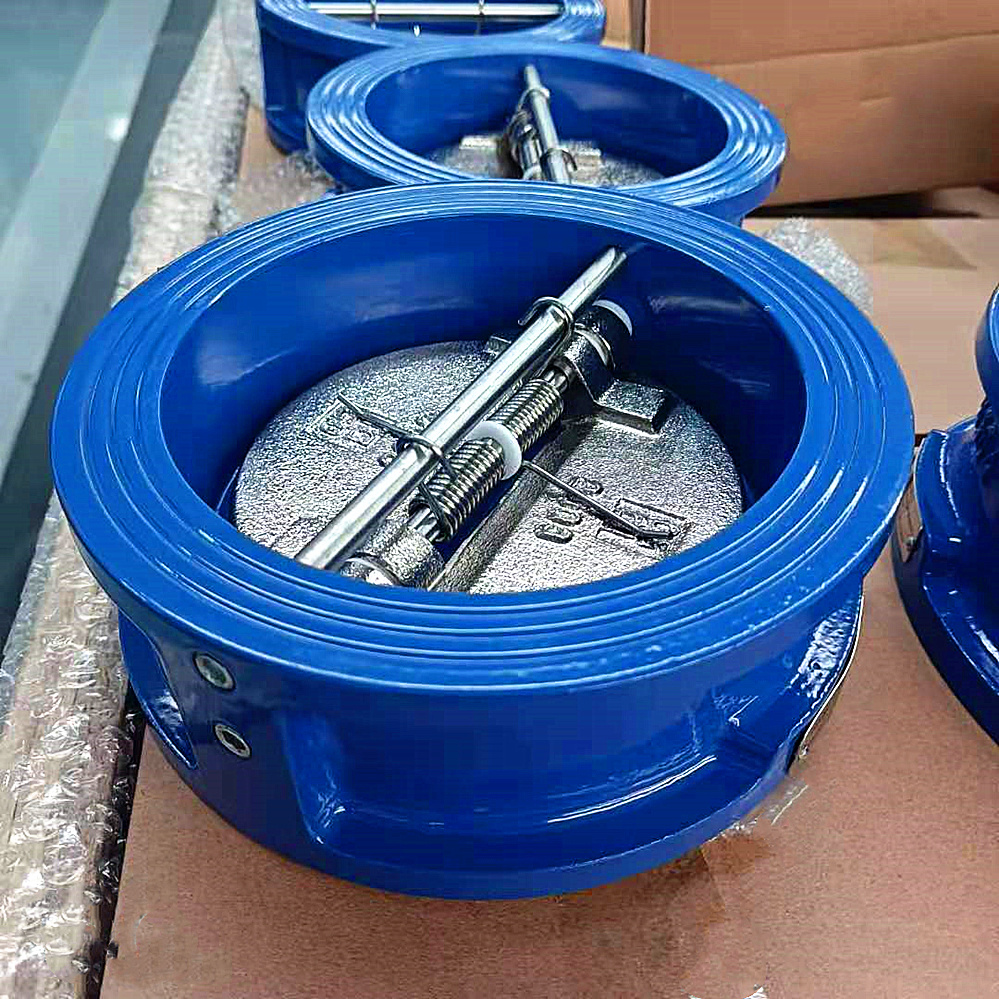
- You’ll also hear them called single plate check valves or wafer single disc checks; 90% of the models you’ll use on the job are the compact wafer style, built to fit between two pipeline flanges without eating up extra space.
- Unlike globe or gate valves built for on/off control, these are strictly for backflow prevention. They’re not designed to throttle flow, and trying to use them that way will wear them out in months, not years.
- Most mainstream models align with industry standards you actually use day-to-day: API 594, API 6D, ASME B16.34, and MSS-SP-25, so they fit standard piping specs without custom fabrication headaches.
Core Design & How It Works in Real Pipelines
- The build is dead simple: a single hinged disc (the flap that opens and closes), a precision-machined seat inside the valve body, a non-blowout hinge pin, and an optional spring for faster closing.
- When fluid flows the right way: line pressure overcomes gravity (and spring tension, if fitted) to swing the disc fully open, creating a clear flow path with minimal pressure drop.
- When flow reverses: reverse pressure, gravity, and spring force snap the disc shut against the seat instantly, forming a tight seal to stop backflow dead in its tracks.
- Two common sealing builds for real-world use: soft-seated (Buna-N, EPDM, Viton) for zero-leak performance with clean water or non-aggressive media, and metal-seated for high temps, high pressures, or fire-safe service requirements.
Where These Valves Actually Shine (Real-World Applications)
- Water & wastewater treatment: The industry default for preventing cross-contamination between potable water lines and wastewater, and for protecting pumps from backflow damage in filtration and distribution systems.
- Oil & gas midstream/upstream: Used in hydrocarbon transmission lines, wellhead systems, and processing plants, with heavy-duty alloy builds that hold up to corrosive crude and extreme high-pressure conditions.
- Chemical processing: Corrosion-resistant stainless steel, duplex, or specialty alloy models handle aggressive acids, solvents, and caustic media without degrading or failing.
- HVAC & commercial building systems: Compact wafer designs fit perfectly in tight mechanical rooms for chilled/hot water circulation, and prevent backflow in boiler feed lines.
- Food, beverage & pharma: Sanitary, polished 316 stainless steel models maintain media purity, with no crevices where bacteria can grow.
- Bonus everyday use case: Compressed air systems, where they stop backflow from damaging air compressors and dryers.
Non-Negotiable Factors When Picking the Right Valve
- Fluid compatibility first, always: The body, disc, and seal material must stand up to your media. No cutting corners here. Carbon steel (WCB) for general oil/water, 304/316 stainless for mild chemicals, duplex stainless for harsh corrosive environments, and seals matched to your fluid’s temp and chemical makeup.
- Pressure & temperature rating: The valve’s max pressure rating needs to be at least 1.25x your system’s maximum operating pressure, per standard safety guidelines. Never use a low-temp soft-seated valve on a high-temp steam line—this is the #1 cause of premature failure we see in the field.
- Flow velocity & sizing: This is the most common rookie mistake. The valve has to be sized to maintain the minimum flow velocity needed to keep the disc fully open during normal operation. An oversized valve causes the disc to “flutter” against the seat, wearing it out fast; an undersized valve creates unnecessary turbulence and pressure drop that drives up energy costs.
- Installation orientation: Most models work flawlessly in horizontal lines, or vertical lines with upward flow. Never install them in vertical downward flow lines—gravity will keep the disc from closing properly, and you’ll get constant backflow.
- Connection specs: Double-check that the valve matches your pipeline flange dimensions (almost always ASME B16.5 for North American projects) to avoid last-minute installation delays.
Simple Maintenance That Keeps Them Running for Years
- Inspection schedule: Quarterly checks for standard, low-cycle systems. For high-temperature, high-cycle, or corrosive media systems, inspect every 1-2 months.
- Critical things to check during inspections:
- Confirm the disc swings freely on the hinge pin, with no sticking or jamming from debris or corrosion.
- Inspect the disc and seat sealing surfaces for pitting, erosion, cracks, or wear—even a small nick can cause persistent leaks.
- Check the hinge pin and spring (if fitted) for wear or damage; these are the most common, easily replaceable wear parts.
- Leak testing: After every inspection, run a hydrostatic leak test per API 598 standards to confirm the seat is sealing properly.
- Routine cleaning: Flush the valve periodically to remove scale, sediment, or debris that can get caught between the disc and seat, or jam the hinge mechanism.
- Parts replacement: Most wear parts (seats, springs, hinge pins) are field-replaceable. You don’t have to swap out the whole valve if one part wears out, which saves a ton of time and money.
The #1 Headache: Water Hammer & How to Fix It
- What causes water hammer with these valves: When flow reverses suddenly, a slow-closing valve lets reverse flow build up speed before the disc seals, creating a massive pressure spike that slams through the pipeline.
- The most reliable fix: Spring-assisted single disc check valves. The spring cuts down closure time drastically, with shorter disc travel meaning the valve seals before reverse flow can build up enough speed to cause a pressure surge.
- Additional tips to avoid water hammer:
- Never install these valves right after a pump shutoff valve, where flow reversal is sudden and extreme.
- Avoid using them in systems with pulsating flow (like reciprocating pump systems) — the constant flow changes will cause disc flutter and premature closure issues.
- Match the valve’s closure speed to your system’s transient pressure behavior, not just the line size.
Final Quick Takeaways
- Single disc check valves are the workhorse of backflow prevention—simple, reliable, compact, and easy to maintain, perfect for 90% of standard industrial fluid systems.
- The biggest mistakes to avoid: wrong material for your media, improper sizing, incorrect installation orientation, and skipping regular inspections.
- When you pick the right valve for your application and stay on top of basic maintenance, these components will protect your system from backflow damage for years, with almost zero unplanned downtime.
- At the end of the day, this isn’t about textbook specs—it’s about picking a valve that fits your actual system, not just the catalog description.

Veyron Valve (Tianjin) Co., Ltd.
Tel:+86 13821711216
Wechat/whatsapp:+86 18822206187
E-mail:anna@veyronvalve.com
Address:No.30,Xiaozhan Industrial park,Jinnan District,Tianjin,China
© 2023 Veyron Valve (Tianjin) Co., Ltd.
license